How to Lower Your Heating Bill Without Sacrificing Comfort: Energy Efficient Heating Solutions for San Diego Homeowners
Heating costs rise when systems run inefficiently or when heat escapes through the home envelope, but targeted changes can cut bills without making your living spaces uncomfortable. This article explains practical, region-tailored strategies—smart thermostat upgrades, furnace maintenance and upgrade decision-making, insulation and air-sealing, proactive HVAC care, everyday habits, and San Diego-specific considerations—that help homeowners reduce winter energy use while preserving comfort. You will learn how smart and programmable thermostat features save energy, which furnace efficiency steps give the best ROI, where to focus air-sealing and insulation work, and which daily routines add up to real savings. Throughout, we quantify trade-offs (e.g., AFUE and duct losses), provide comparison tables to simplify choices, and give clear checklists for DIY steps versus when to call a professional. The guidance emphasizes energy efficient HVAC San Diego homeowners can apply now, plus actionable next steps for scheduling service or getting a quote if you prefer professional help.
How Can Smart Thermostat Installation Reduce Your Heating Bill?
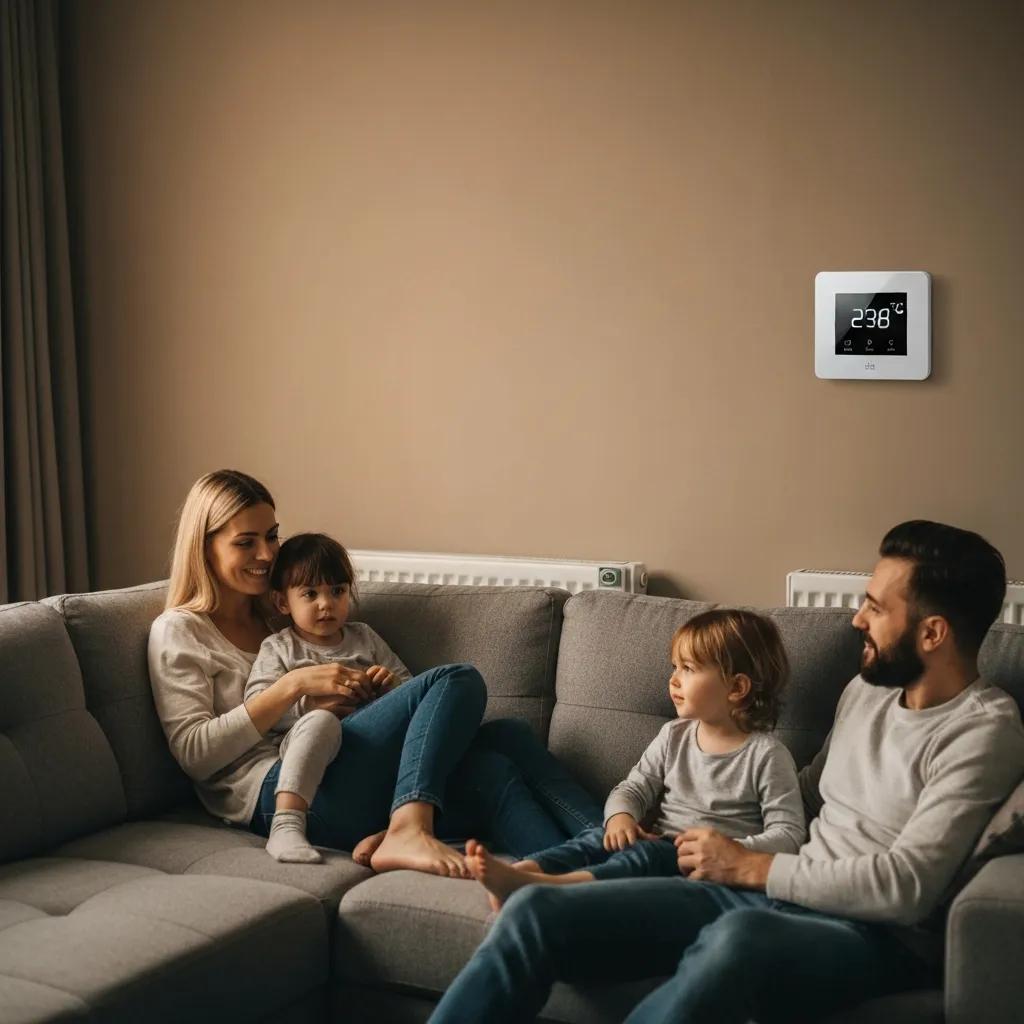
Smart thermostat installation reduces heating costs by automating setbacks, learning occupancy patterns, and enabling remote control, which together lower runtime and improve system cycling. These devices work by adjusting setpoints, using sensors to avoid overheating, and integrating with zoning or heat pump systems to match comfort to use patterns, delivering typical savings supported by Energy Star guidance. Installation considerations include compatibility with your furnace or heat pump, requirement for C-wire or adapter, and whether remote sensors are needed for multi-zone comfort. The next paragraphs explain specific benefits and then compare common models so you can match features to San Diego heating types and heating goals.
What Are the Benefits of Programmable and Smart Thermostats for Energy Savings?

Programmable and smart thermostats save energy by enforcing temperature setbacks, learning household schedules, and reducing unnecessary heating when spaces are unoccupied. Learning algorithms and geofencing help avoid wasted heat, while remote access and reporting provide visibility into runtime and energy use so homeowners can identify inefficiencies. Additional comfort features—remote sensors, humidity reporting, and compatibility with zoning systems—help balance efficiency with evenly distributed warmth. Consider this checklist when evaluating a thermostat: schedule automation, sensor support for multi-room accuracy, and heat-pump or dual-fuel compatibility to ensure peak efficiency.
Smart thermostats offer several practical homeowner benefits:
- Automated setbacks: reduces runtime during sleep and away periods.
- Learning schedules: adapts to occupant patterns to avoid over-heating.
- Remote monitoring: gives immediate control and energy usage insight.
- Sensor-based comfort: balances temperature across rooms for fewer overrides.
These benefits lower runtime and bill volatility while improving comfort, and understanding model differences leads naturally to selecting the right device for your home.
Smart Thermostats and Heat Pumps: Optimizing Control for Energy Efficiency
Advanced, colorfully-graphic touch-screen thermostats entered the market over ten years ago, providing a much-needed improvement to the control of home heating and cooling systems. And in the last few years, climate change mitigation concerns and rebates from the Inflation Reduction Act (IRA) have accelerated heat pump installations in homes across U.S. But the relationship of smart thermostats to typical air source heat pumps (ASHP) has been rocky at best: ASHPs with variable speed drives require a deeper integration with a thermostat, and most third-party smart thermostats have step-level staged control. Proprietary thermostats that come with the ASHP units are typically not as easy to understand and use as the popular smart thermostats on the market. Moreover, heat pumps with supplemental electric resistance heating require a different control approach that respects the lower temperature/long cycle heat transfer of heat pumps and understands the impact on the electrical grid, es
Which Smart Thermostat Models Are Best for San Diego Homes?
Below is a concise comparison of popular smart thermostat models and the features that matter for San Diego homeowners, especially those with mild winters, heat pumps, or ductless systems. The table compares learning features, remote sensors, and best-use cases to match local housing and climate considerations.
Smart thermostat feature comparison and best use cases.
| Thermostat Model | Key Feature | Best-Use Case |
|---|---|---|
| Nest (learning) | Adaptive learning, simple UX | Single-family homes seeking automation |
| Ecobee (sensors) | Remote room sensors, energy reporting | Homes with uneven rooms or large layouts |
| Honeywell (compatibility) | Broad HVAC compatibility | Older systems or varied furnace wiring |
| Dedicated heat-pump models | Heat-pump optimization | Homes with heat pumps or ductless mini-splits |
This comparison highlights that sensor-equipped models suit houses with uneven heat distribution, while learning thermostats work well where occupants follow predictable patterns. Evaluating compatibility and sensor needs prevents installation surprises and maximizes savings. Professional installation can ensure wiring compatibility and optimal sensor placement.
For homeowners who prefer a turnkey installation, Dale-Air provides thermostat repair and thermostat installation services and can handle wiring, sensor placement, and system integration to ensure your smart thermostat delivers the expected savings. Scheduling a professional setup helps avoid common compatibility problems and speeds up reliable operation.
What Furnace Efficiency Tips Help Lower Heating Costs Without Losing Comfort?
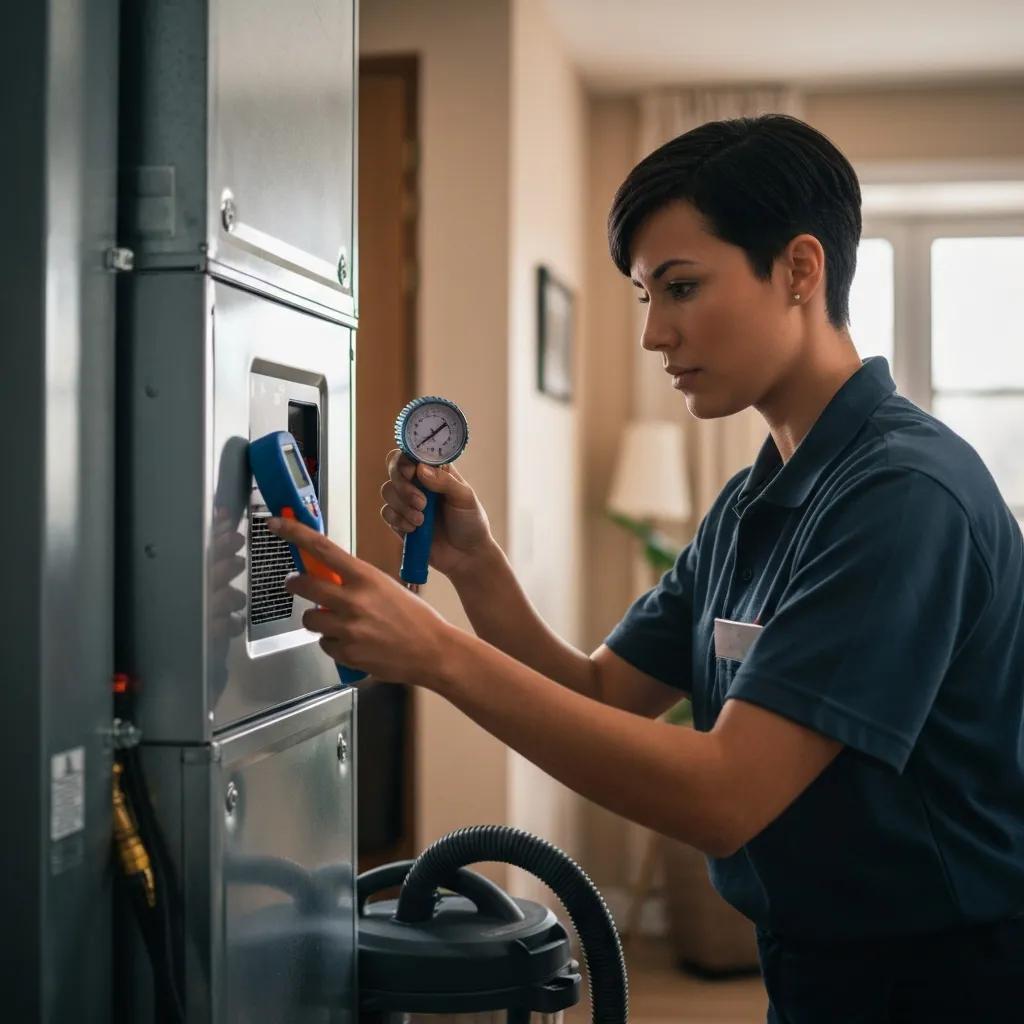
Furnace efficiency improves when routine maintenance, correct airflow, and appropriate sizing are addressed—actions that reduce fuel use while maintaining a steady indoor temperature. Key levers include regular filter replacement, annual tune-ups, combustion inspection, and maintaining proper duct airflow; together, these preserve AFUE performance and reduce short cycling. The next subsections explain why annual maintenance matters and present a decision framework for repair versus replacement so homeowners can weigh tune-up benefits against upgrading to a high-efficiency furnace.
Why Is Annual Furnace Maintenance Essential for Energy Savings?
Annual furnace maintenance restores and preserves efficiency by cleaning burners, checking heat exchangers, calibrating controls, and ensuring proper combustion, all of which sustain AFUE and reduce fuel consumption. A professional tune-up typically uncovers minor repairs before they escalate, improving safety while reducing emergency service calls and inefficient operation. Regular maintenance also preserves expected lifespan and keeps warranties valid when applicable, and simple homeowner checks—regular filter replacement and verifying consistent flue draft—bridge service visits. Use this maintenance checklist to track essential tasks: filter changes, burner cleaning, heat exchanger inspection, and airflow verification.
Maintenance tasks homeowners should track:
- Replace or clean filters monthly during heavy use to maintain airflow.
- Inspect and clean burners and ignition components to ensure proper combustion.
- Check heat exchanger and safety controls to prevent efficiency loss and hazards.
- Verify airflow and thermostat calibration to keep system cycling optimally.
Routine care reduces inefficiencies and prevents comfort loss; understanding these tasks leads to the next consideration of whether incremental repairs or a high-efficiency replacement is the better long-term choice.
How Does Home Insulation and Air Sealing Improve Heating Efficiency?
Improving insulation and air sealing tightens the home envelope, reducing heat loss and the demand on heating systems, which directly lowers heating bills while improving comfort consistency. Heat escapes through attics, rim joists, windows, doors, and leaks around duct penetrations, and targeted insulation or sealing at these points yields measurable reductions in heat loss. The following subsections provide DIY sealing tactics and explain how professional duct sealing and insulation produce larger savings for typical San Diego homes.
What Are the Most Effective Ways to Seal Drafts Around Windows, Doors, and Ductwork?
Practical sealing methods include applying caulk to stationary gaps, installing weatherstripping around operable frames, adding door sweeps, and insulating electrical and plumbing penetrations; these DIY steps reduce infiltration with modest cost and quick payback. For ductwork, accessible seams and joints can be sealed with mastic or UL-rated tape, but hidden or buried ducts typically need professional diagnosis and sealing. Quick inspection tips: hold a candle near suspect seals on a windy day, inspect attic penetrations, and check for cold spots near ducts. Prioritize attic air sealing and accessible duct joints first to get the largest immediate benefit.
Common DIY sealing steps:
- Caulk around window frames and stationary gaps to stop continuous air leakage.
- Install compressible or V-strip weatherstripping for doors and operable windows.
- Apply door sweeps and draft guards to reduce corridor and exterior leakage.
- Seal visible duct seams with mastic or approved tape to improve system delivery efficiency.
These measures reduce infiltration and prepare the home for larger insulation upgrades; if ducts remain leaky or hidden, professional sealing is the next logical step.
Attic Insulation and Air Sealing: Performance in California Climates
Thermal. Sealed and insulated attics are expected to maintain attic air temperatures that are similar to those in the house within +/- 10°F. Thermal stress on the assembly, namely high shingle and sheathing temperatures, are of minimal concern. In the past, many sealed and insulated attics were constructed with insufficient insulation levels (~R-20) and with too much air leakage to outside, leading to poor thermal performance. To ensure high performance, sealed and insulated attics in new California homes should be insulated at levels at least equivalent to the flat ceiling requirements in the code, and attic envelopes and ducts should be airtight. We expect that duct systems in well-constructed sealed and insulated attics should have less than 2% HVAC system leakage to outside.
Why Is Proactive HVAC Maintenance Key to Reducing Heating Bills?
Proactive HVAC maintenance prevents gradual efficiency declines, uncovers minor issues before they become major failures, and sustains comfort while lowering operating costs over time. Scheduled tune-ups, combined with filter management and duct inspections, keep combustion, airflow, and controls operating within manufacturer tolerances—preserving AFUE and limiting wasted runtime. The following H3 sections detail what a thorough tune-up includes and explain how maintenance plans support long-term savings and service priority for homeowners.
What Does a Comprehensive HVAC Tune-Up Include?
A comprehensive HVAC tune-up includes inspection and cleaning of burners and heat exchangers, airflow and filter checks, calibration of thermostats and controls, safety checks for combustion systems, and verification of flue and venting performance. Technicians also test system cycling, check electrical connections, and measure static pressures to ensure balanced airflow, documenting findings and recommending any needed repairs. Homeowners benefit from receiving a checklist of completed tasks and any follow-up recommendations to maintain peak performance between visits. Quick DIY checks—monitoring filter condition and listening for abnormal operation—help sustain tune-up benefits until the next service.
Tune-up checklist highlights:
- Inspect and clean combustion components and heat exchangers for safe, efficient operation.
- Verify airflow, motor condition, and filter integrity to prevent performance loss.
- Test controls, thermostat calibration, and safety interlocks to ensure correct cycling.
- Document findings and recommend next steps for sustained efficiency.
How Do Dale-Air’s HVAC Maintenance Plans Support Long-Term Savings?
Dale-Air’s maintenance plans provide scheduled tune-ups, prioritized service, and discounts on repair work to help homeowners keep systems operating efficiently and avoid expensive breakdowns. By enrolling in a plan, homeowners receive routine inspections and cleaning on a cadence recommended by technicians, which preserves AFUE, reduces emergency calls, and keeps warranty conditions intact when applicable. The plan structure delivers predictable costs and a documented service history that helps with decision-making about repairs versus upgrades. For local homeowners, signing up for a maintenance plan is a practical way to convert maintenance into measurable savings and extended equipment life.
Enrollment in a maintenance plan typically yields these benefits:
- Scheduled inspections and preventive tune-ups to maintain efficiency.
- Priority scheduling and reduced emergency response times for members.
- Local, trusted service from a family-owned San Diego provider emphasizing honesty and quality work.
If you want to move from DIY upkeep to scheduled professional maintenance, contacting Dale-Air to request a quote or schedule an appointment is a straightforward next step to lock in long-term efficiency gains.