
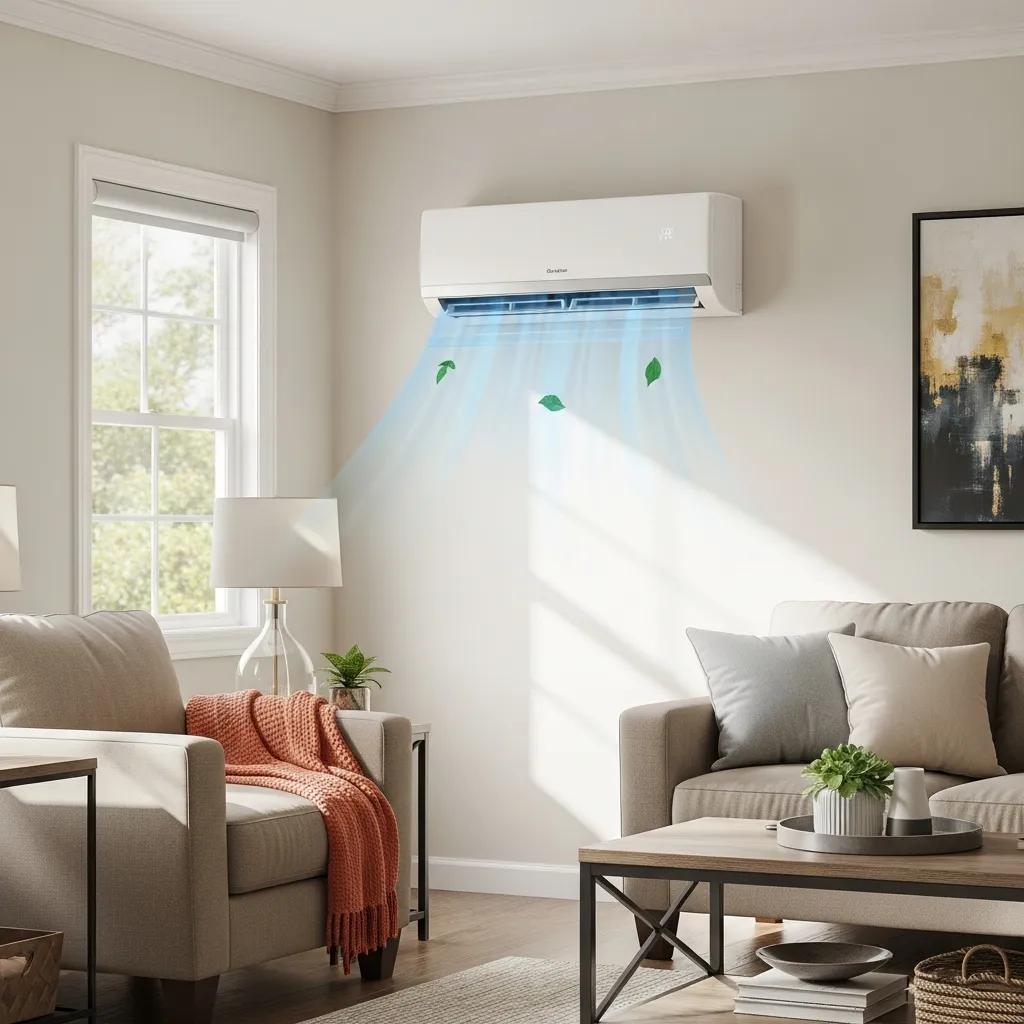
The Pros and Cons of Ductless Mini-Split Systems: A Comprehensive Guide for San Diego Homeowners
Ductless mini-split systems are compact heating and cooling solutions that use an outdoor compressor paired with one or more indoor air handlers to provide efficient, zone-based climate control. These systems rely on inverter-driven compressors and refrigerant line sets to transfer heat rather than distributing conditioned air through ducts, which supports precise temperature management and reduced energy loss. For San Diego homeowners, ductless systems often match local climate needs by delivering efficient cooling during warm months and mild heating when temperatures dip, while avoiding invasive ductwork in older or retrofit properties. This guide explains how mini-splits work, the main advantages and trade-offs, suitability for common San Diego home types, installation considerations and costs, recommended features and brands for the local climate, and practical steps for choosing a qualified installer. Readers will learn technical basics, energy and maintenance implications, aesthetic and capacity considerations, and when to call a local pro for an on-site assessment. The following sections use clear comparisons, tables, and checklists to help you decide if a ductless mini-split is the right solution for your home.
What Are Ductless Mini-Split Systems and How Do They Work?
Ductless mini-split systems are HVAC units that provide conditioned air directly via wall-, floor-, or ceiling-mounted indoor units linked to an outdoor condenser through a small refrigerant line set. The mechanism relies on a refrigerant cycle driven by an inverter-controlled compressor that modulates capacity to match demand, which reduces cycling losses and improves efficiency. Because each indoor unit contains its own air handler, mini-splits enable multi-zone control without ducts, delivering targeted comfort to distinct rooms while minimizing distribution losses common to forced-air systems. In San Diego’s mild coastal climate, this setup often yields meaningful energy savings and flexible installation options for houses that lack existing ductwork. Understanding the components and operation below clarifies why mini-splits are increasingly popular for retrofits, additions, and multi-zone comfort upgrades.
Understanding the Components and Operation of Mini-Splits
A typical mini-split system consists of two meronymic parts: indoor air handlers and an outdoor condenser/compressor, connected by a refrigerant line set, control wiring, and a condensate drain. Indoor units contain the evaporator coil, fan, filter, and controls; the outdoor unit houses the compressor and condenser coil, while the inverter modifies compressor speed to match load. Inverter technology reduces start/stop cycles by continuously adjusting capacity, which improves SEER/HSPF performance and reduces energy consumption in variable-load climates. For example, a simple two-zone setup might pair one outdoor unit with two wall-mounted indoor units—each with its own thermostat—allowing simultaneous heating in bedrooms and cooling in living areas, and demonstrating how components interact to deliver zoned comfort.
How Ductless Systems Differ from Traditional HVAC Solutions
Ductless systems eliminate the need for ductwork, which is the primary hypernym separating them from central forced-air HVAC systems, and they provide zone-by-zone control rather than a single thermostat for the whole house. Without ducts, distribution losses from leaky or poorly insulated plenums disappear, making mini-splits more efficient in many retrofit scenarios compared with conventional central AC or electric resistance heating. Installation footprint differs as well: mini-splits require small penetrations for line sets and condensate, whereas central systems need large duct runs and register locations, impacting aesthetics and construction complexity. These functional and installation distinctions make mini-splits especially practical for older homes, room additions, and condos where installing ducts would be costly or impractical, and they lead naturally into the energy and comfort advantages discussed next.
What Are the Key Advantages of Ductless Mini-Split Systems?
Ductless mini-splits deliver several clear advantages that target energy efficiency, comfort control, and installation flexibility for modern homes. The principal benefits include high part-load efficiency via inverter-driven compressors, granular zone control to reduce wasted conditioning, improved indoor air quality through filtration at each indoor unit, and quieter operation compared with many window units or older forced-air systems. These features make mini-splits especially attractive for San Diego homeowners seeking lower energy bills, personalized comfort, and retrofit-friendly installations without the disruption of ductwork.
The following numbered list highlights the top benefits in concise form to aid quick comparisons and decision-making.
- Energy Efficiency: Inverter compressors reduce cycling and maintain steady output, improving SEER/HSPF performance.
- Zoned Comfort: Independent indoor units allow different temperatures in rooms, minimizing wasted heating or cooling.
- Improved Air Quality: Built-in filters at each indoor handler reduce particulates and allow localized filtration upgrades.
- Flexible Installation: Small line-set penetrations enable retrofits in homes without ducts and simplify additions.
- Quiet Operation: Indoor units run at low fan speeds for near-silent performance during normal use.
How Suitable Are Ductless Mini-Splits for Different San Diego Home Types?
Ductless mini-splits are highly suitable for a range of San Diego housing types—including older bungalows without ducts, condos, room additions, and small-to-medium single-family homes—because they avoid the need for ductwork and can be tailored by zone to household usage patterns. Suitability depends on whole-house load, the number of required zones, architectural constraints, and homeowner priorities for aesthetics and noise. For historic or multi-story homes, mini-splits can provide targeted comfort to individual rooms with minimal impact on building fabric, while larger modern homes may need multiple outdoor compressors or a hybrid solution to meet full-house loads. The assessment checklist below clarifies which scenarios favor mini-splits and when central air remains preferable, and it introduces how Dale-Air’s local expertise can help with on-site evaluations.
- This checklist helps homeowners assess whether a mini-split fits their home type and goals.
- No existing ductwork: Mini-splits are often the least invasive option for comfort upgrades.
- Room additions or conversions: Ideal for conditioning new or repurposed spaces without extended duct runs.
- Condo or small home: Efficient option when whole-house central capacity is unnecessary.
- Large whole-house needs: Consider multi-compressor mini-splits or central systems for uniform conditioning.
Are Mini-Splits Ideal for Older Homes Without Existing Ductwork?
Mini-splits excel in older homes because they require only small line-set penetrations and do not need extensive duct installations that can disturb historical finishes and structural elements. Structural considerations include wall thickness, access for routing line sets and condensate, and available locations for discreet indoor unit placement; installers will evaluate these during a site survey. For an older San Diego bungalow, a multi-zone configuration can provide separate control for living spaces and bedrooms while preserving original architecture, and careful routing keeps alterations minimal. Homeowners should request an on-site assessment to map optimal indoor unit locations and evaluate whether phased installation makes sense for budgetary or aesthetic reasons.
How Do Mini-Splits Compare to Central Air Conditioning Systems?
Mini-splits and central air systems differ in several measurable ways: mini-splits offer superior zoning and reduced distribution losses, while central systems can be more cost-effective for whole-house conditioning where existing ducts are in good condition. Maintenance patterns diverge as well—mini-splits require attention to multiple indoor units and condensate management, whereas central systems focus on filter changes and duct maintenance. Lifespan and efficiency depend on equipment quality, installation, and use patterns, with inverter-equipped mini-splits often outperforming older central units on part-load efficiency in climates like San Diego. Comparing options based on zone needs, duct condition, and long-term energy goals helps homeowners choose the right architecture for their property.
What Should You Know About Mini-Split Installation and Choosing the Right System?
Selecting and installing a mini-split involves a site survey, load calculation, system selection, physical installation of indoor and outdoor units, refrigerant charging and commissioning, and user training on controls. Typical timeline phases include initial assessment, equipment ordering, installation day(s), testing and balancing, and final homeowner walkthrough, with total calendar time depending on the number of zones and site complexity. San Diego-specific cost drivers include permit fees, the number of indoor units, accessibility for line-set runs, and whether electrical upgrades are necessary. Below is an EAV-style brand-feature comparison to help prioritize features like inverter capability, low-GWP refrigerants, noise levels, and local serviceability.
Before the table, consider these key selection priorities and how they influence outcomes for local installations.
| Brand Category | Key Feature | Why It Matters for San Diego |
|---|---|---|
| High-efficiency inverter models | Advanced inverter control | Better part-load performance in mild climate |
| Low-GWP refrigerant models | R-32 or similar refrigerants | Lower environmental impact and evolving regulations |
| Low-noise indoor units | Sound-dampening design | Improves bedroom and living space comfort |
| Smart-control ready models | Wi-Fi or app control | Enables schedules and remote zone management |
What Is the Typical Installation Process and Cost for San Diego Homes?
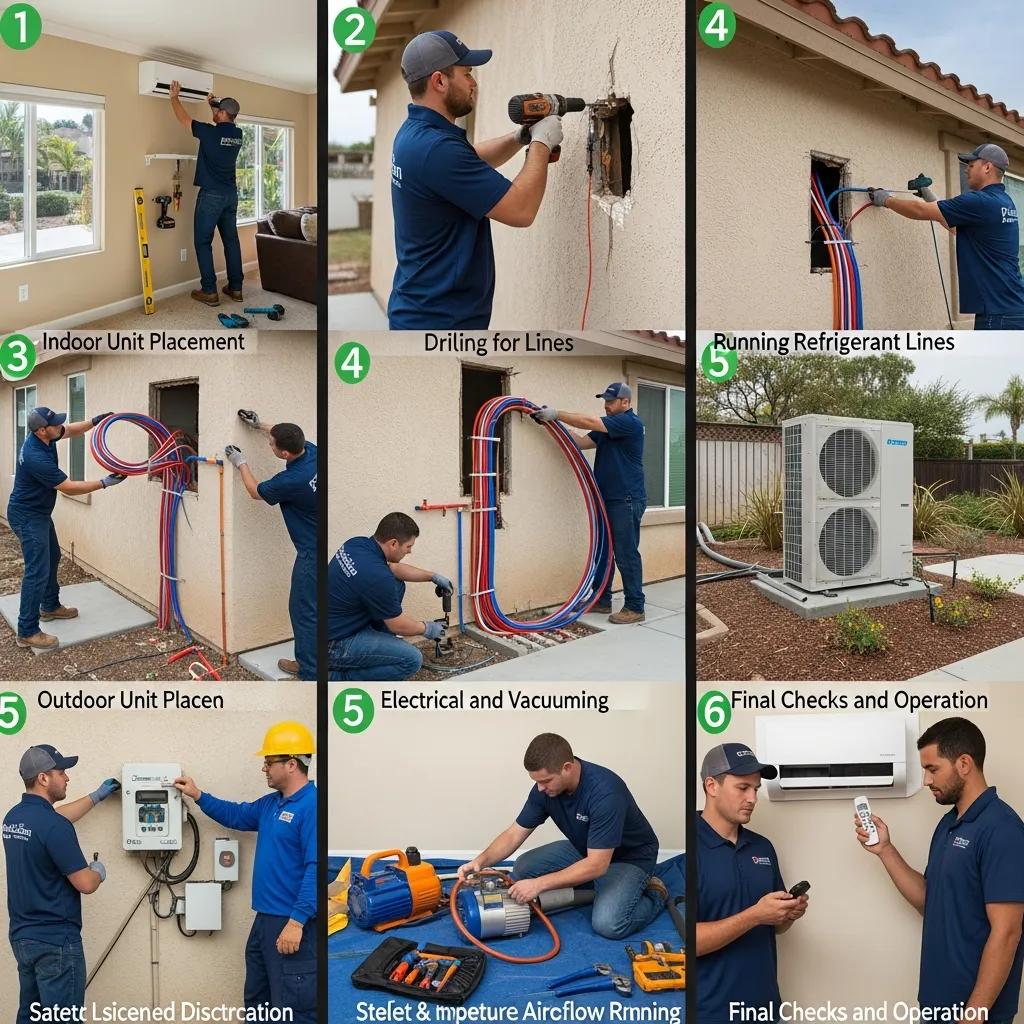
A typical installation starts with a site survey and load calculation to determine the number and capacity of indoor units, followed by system selection and permitting. On installation day, technicians mount indoor units, run refrigerant line sets and condensate drains through small wall penetrations, install the outdoor compressor, connect electrical components, vacuum and charge the refrigerant, and test the system for proper operation and control integration. Local San Diego cost estimates vary by scope but generally fall within a range reflecting single-zone to multi-zone setups; homeowners should expect single-zone installations to be notably less expensive than multi-zone whole-house configurations. Factors that affect cost include the number of zones, ease of line-set routing, necessary electrical upgrades, permit costs, and whether concealment or structural modifications are required. Questions to ask installers include warranty details, commissioning procedures, refrigerant verification methods, and recommended maintenance schedules.
- Factors that affect cost and value when obtaining quotes:
- Number of zones: More indoor units increase equipment and labor costs.
- Line-set routing difficulty: Hard-to-access locations raise installation time and price.
- Electrical work: Service upgrades or new breakers add to overall expenses.
- Permits and inspections: Local compliance can affect timeline and cost.
This process overview prepares homeowners to evaluate quotes and choose the right installer; for San Diego residents, getting a localized, written quote is essential before scheduling work.
Which Brands and Features Are Recommended for Local Climate and Needs?
For San Diego’s mild, coastal climate, prioritize mini-split systems with high part-load efficiency through inverter compressors, low-noise indoor units, and options for smart controls to tailor schedules to household patterns. Low-GWP refrigerants and strong local warranty/service networks are also important attributes to look for when selecting equipment, as they reduce long-term environmental impact and simplify maintenance. Consider brand-feature trade-offs such as higher upfront premium for advanced inverter models versus lower initial cost of basic units; higher-efficiency models often yield better lifecycle value in climates with frequent part-load operation. When evaluating warranties and support, prefer installers and manufacturers that provide transparent commissioning and accessible local service to ensure long-term performance.
An EAV table follows to compare representative feature priorities and practical outcomes for San Diego installations.
| Feature Focus | Characteristic | Local Benefit |
|---|---|---|
| Inverter performance | Variable-speed compressors | Superior part-load savings in mild climate |
| Noise control | Low-dB indoor design | Better sleep and living-area comfort |
| Refrigerant type | Low-GWP options | Future-proofing and regulatory alignment |
| Smart controls | Wi-Fi scheduling & zoning | Easier energy management and remote control |
This comparison helps homeowners match specific product features to their priorities, from low noise for bedroom units to smart-control integration for energy savings. After selecting preferred features, the next section explains why many San Diego homeowners choose Dale-Air for installation and service.
Why Choose Dale-Air for Your Ductless Mini-Split Installation and Service in San Diego?
Dale-Air is a family-owned HVAC provider focused on installation, repair, and maintenance for ductless mini-split systems in the San Diego area. The company emphasizes quality, affordability, and customer satisfaction, supports local veterans as part of community engagement, and has a history of positive online reviews that underscore consistent customer experiences. For homeowners seeking local expertise, Dale-Air provides on-site assessments and localized quotes to ensure accurate system sizing and tailored installation plans based on specific home layouts and usage patterns. To request a free, localized quote or to book an appointment for an on-site evaluation, contact Dale-Air by phone at (619) 343-3524. These direct options help homeowners move from planning to installation with clear, written estimates and scheduling.